Ordus Alphabeticae
why is A primus and Zed ultimate?

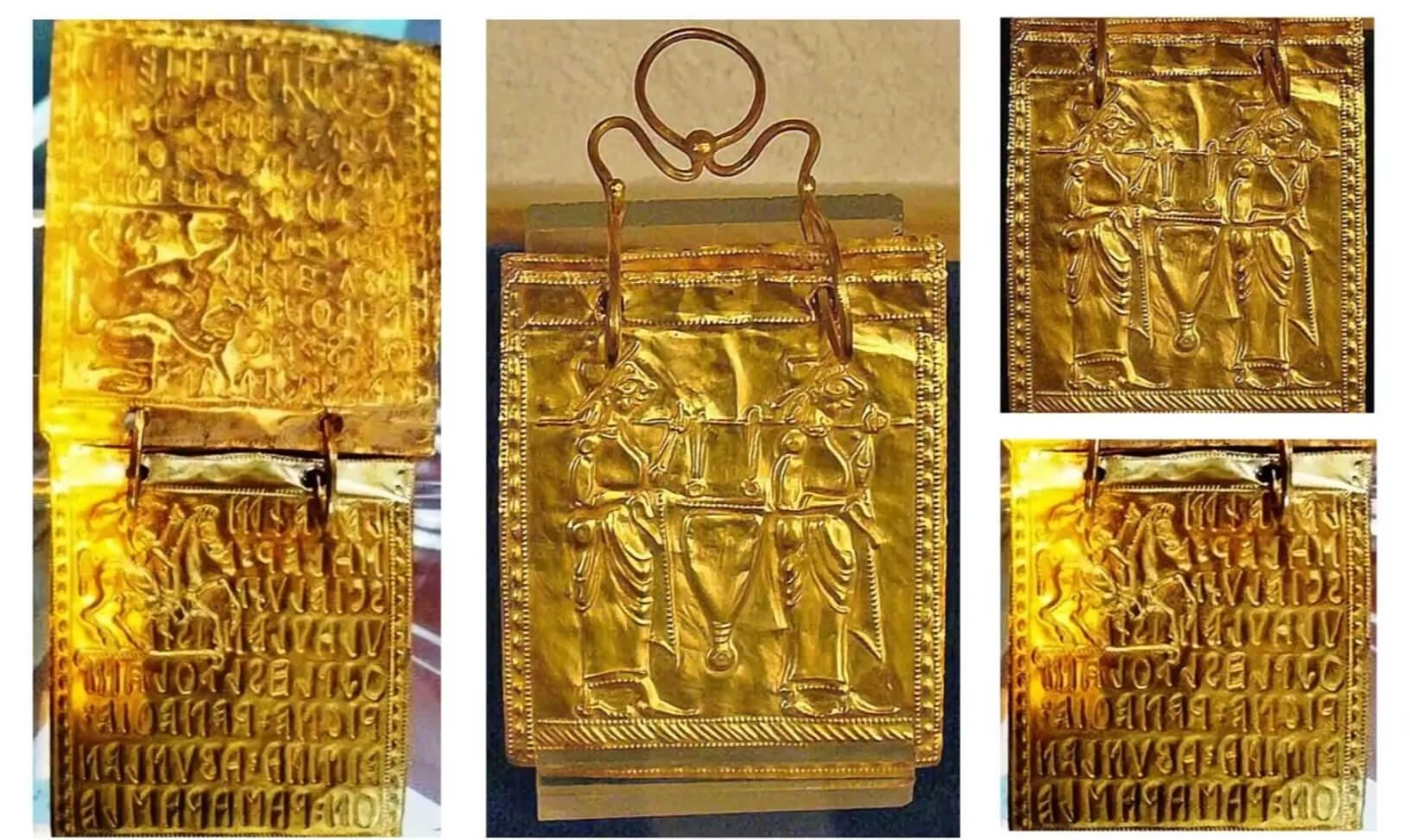
So hear me out - I’m not a nutjob or think that rubbing crystals will heal my arthritis or any of that crud. But from what I know of the traditions of numbers and the use of words (including the invention of writing) I have the burning question ever present of why is the Alphabet in the order of the Alphabet?
I mean sing with me, “ABCDEFG-HIJKLMNOP-QRS-TUV-WX-Y&Z”. You can’t help but sing it in your head when you read that 26 letter string. It has been ingrained in us from childhood in the English speaking world. Other cultures ingrained the order of their letters into children in a similar way. It has become as familiar to us as water is to a fish and, like the fish, we don’t question why the water is wet. But why are the letters in that order? Why 26, for that matter? Other cultures have lesser or fewer (Greek = 24; Mandarin Chinese = 50,000!!!! though they aren’t technically “letters” but rather “characters” which create the Hanzi system)
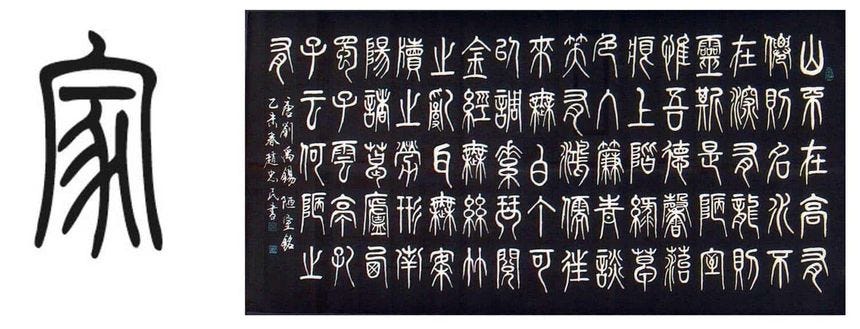
The order, number, heck, even the shape of the letters changes over time forcing us to recognize that the alphabet as is was not the alphabet that was nor the alphabet that may come to pass yet. Alphabet is not the Alpha and Omega.
But for that matter, why does the Christ say “I am the Alpha and Omega” (Rev 22:13)? For any text to work both the giver and the receiver have to understand what is being said (both literally and figuratively; denotation and connotation). Did the audience of John of Patmos, Ἰωάννης ὁ Θεολόγος, understand something we do not? Do Alpha and Omega mean the same thing to a literate society as they do to an illiterate society?
The study of words and their relation to thought, semiotics, has for years parsed why we created these tools, what effect they have, and how they got to be the way they are. Professor Jackson Crawford in his free series on runes discusses the Norse FUTHARK and the change that occurred in this system sometime in history.

Why did the Norse change the order? There seems to be no agreement as to why. But look, the whole system is artificial and subject to change. Though earlier peoples saw writing as magical in itself, it is essentially a tool created by humans.
It is possible, then, that the order was changed to accord with other writing systems encountered. It is possible that some letters fell out of use or convenience while others were incorporated into the system to represent new sounds or evolving language (How often do you say “Phthah” in modern English? The Greeks seem to have said it alot and hence the letter combo of PhiTheta.) So it seems that the “tool” of language evolves like any other tool to accommodate the necessity of work given to it. You improve the phone to make it more convenient and better at doing its job. You alter the automobile to be faster, cleaner, and safer. You change the pantaloons to fit more snuggly on the bum.
(though the hammer seems to be unchanged since ancient Egypt! that’s efficiency, buddy.)

But then there is the isopsephia thing. What does one do with that? If you haven’t heard of isopsephia (gematria in Jewish culture) it is
…the practice of adding up the number values of the letters in a word to form a single number.[2] The total number is then used as a metaphorical bridge to other words evaluating the equal number,[3] which satisfies isos or "equal" in the term…
Gematria and Isopsephia are the assigning of mathematical properties to letters, or conversely, representing mathematical concepts with letters. Whether you’re into numerology or not (I am not) the practice was extremely widespread in earlier cultures as far back, it would seem, as those neolithic peoples after the Younger Dryas (12,000 BC if you’re counting. :)
It would be surprising if the Norse did not also hold this connection between numbers and their letters.
Consider also that writing in the West is itself an invented tool - somewhere around the 3000 in Egypt if the scholars are to be trusted.

In fact the rubicon between history and prehistory normally is marked by the invention of letters - though that might be odd for the Chinese whose Hanzi system was created in 1200s BC whilst the creation of letters in the Middle East seems to have been in 3200 BC (on a Tuesday… at 3pm… during siesta). The earliest systems of writing were picture writing, or “logographic”.
In a written language, a logogram (from Ancient Greek logos 'word', and gramma 'that which is drawn or written'), also logograph or lexigraph, is a written character that represents a semantic component of a language, such as a word or morpheme.
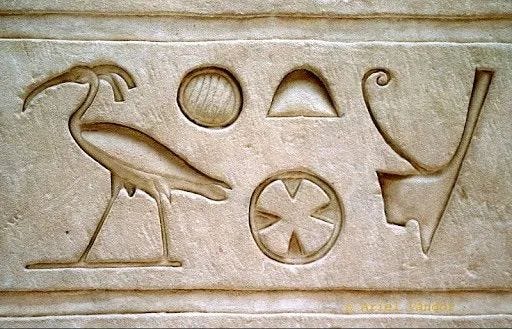
Later systems are referred to as “phonemic” where “individual symbols represent sounds directly and lack any inherent meaning.” So for instance, our letter “A” originally represented a bull, or “alep” in Mesopotamian, later “aleph” in Hebrew & “alpha” in Greek. The horns and face get rotated stylized until our letter no longer has an obvious connection to a bull but merely suggests we make a sound in the back of our throat like goat.

The systems of writing in human culture, it used to be believed, were connected via a single stem emerging from Mesopotamia and spreading to the rest of the world; an obviously off theory, IMO. More recent study suggests that writing emerged not once but several times in human culture in different unconnected (seemingly) places on the planet!
…the systems of pre-Columbian Mesoamerica conclusively establish() that writing had been independently invented multiple times. Four independent inventions of writing are most commonly recognized[9] – in Mesopotamia c. 3400 – c. 3100 BC, in Egypt c. 3250 BC,[10][11][7] in China before c. 1250 BC,[12] and in Mesoamerica before c. 1 AD
The systems all began with pictograms, some moved phonemes, others didn’t. Early phonetic languages were consonantal only and are referred to as ”consonantaries” or “abjads”.
based on the Arabic alphabet's first four letters in their original alphabetical order – corresponding to ʾa, b, j, and d – which reflects the alphabetical order ʾaleph, bet, gimel, dalet in other consonantal Semitic scripts such as Phoenician, Hebrew, and other Semitic proto-alphabets
Later systems that incorporated vowels are referred to as “abugidas” (where vowels are indicated through diacritics or modification of the shape of the consonant) and later as “alphabets”.
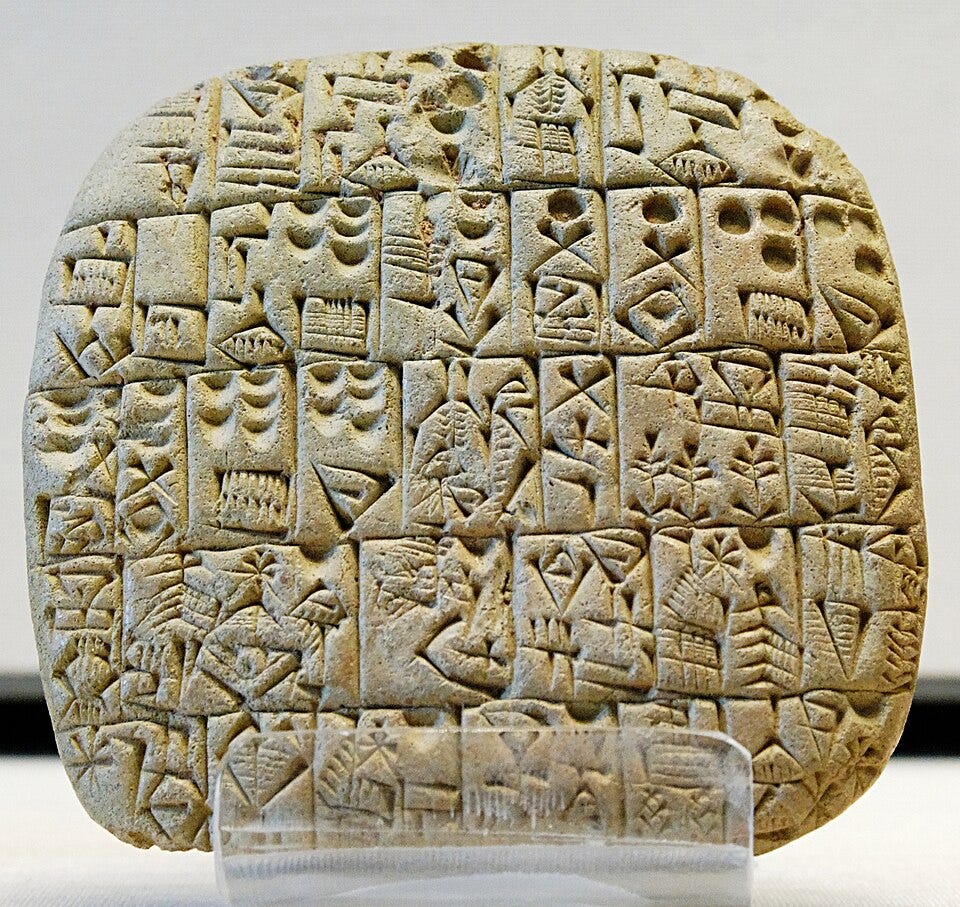
But here’s the thing: the letters have to be ordered in some sequence (left to right, right to left, top to bottom, whatevs). That requires number and choice of which letter will fall where in the ordering of the letter system. Maybe it was arbitrary (I think not) but what it indicates is that MATH PRECEDES LETTERS.
Humans were “doing” maths long before they “did” letters.
The earliest mathematical texts available are from Mesopotamia and Egypt – Plimpton 322 (Babylonian c. 2000 – 1900 BC),[2] the Rhind Mathematical Papyrus (Egyptian c. 1800 BC)[3] and the Moscow Mathematical Papyrus (Egyptian c. 1890 BC).
But the earliest evidence of math is way way way before the earliest written evidence.
The use of yarn by Neanderthals some 40,000 years ago at a site in Abri du Maras in the south of France suggests they knew basic concepts in mathematics.
Let that sink in for a minute. Mathematics in humans (in humans, btw) is 35,000 years prior to letters! And that might be older since math is not limited to humans alone, according to recent research (“Modern studies of animal cognition have shown that these concepts are not unique to humans.”)
To put it lightly, we have been working with mathematics a really freaking long time. Math has always been seen, too, as connected to the realm of the divine. Whatever symbols we use to represent math, the concepts of mathematics are time-honored and revered with the implication that they are aspects of the divine being (whoever that is). Only much later in human history were letters assigned to numbers.
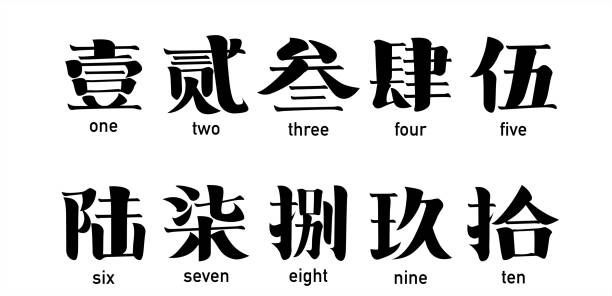
Gematria and Isopsephia have to be taken seriously for no other reason than that associating the two was what ancient people have done for over 5,000 years. To dismiss this practice as primitive mumbo jumbo or as new age heresy is simply hubris.
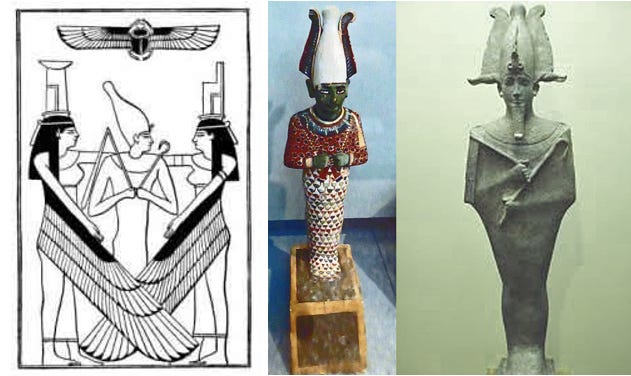
But what this also implies is that when a letter changes, or when a number changes in society (and yes, numbers change b/c some become more emphasized over time and others lose prominence in the imaginative and artistic world) it is almost inevitably connected to some theological change that might be connected to regime change. Leaders, kings, saw themselves as representatives of the divine power on earth and claimed special protection from certain entities who approved and sanctified their reign (which may be a convenient fiction for tyrants but was the way rulers operated until yesterday). Those entities (called neteru, or neters, in Egyptian; “powers”) were all connected to numbers. So one king defeats another king, the god of that victorious king (and thus the number which that god embodied) must be in the ascendant over the god of the other king who was on the decline (and thus the number which that god embodied).
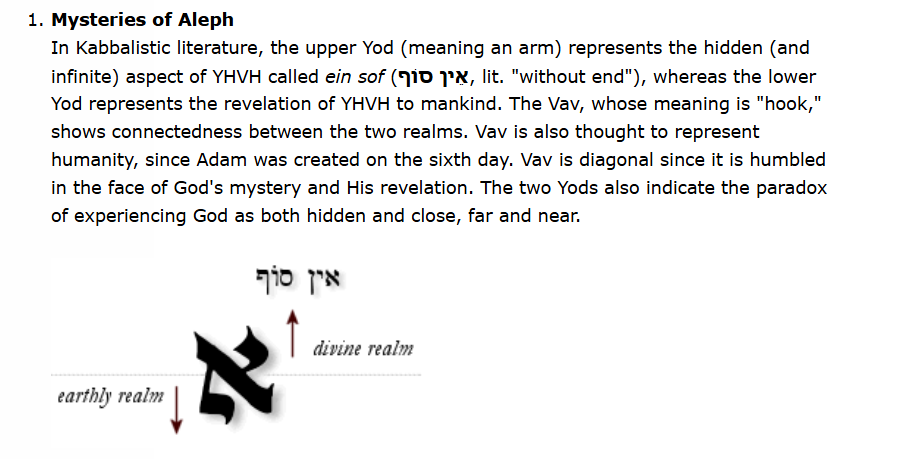
Take our letter “A” for instance. According to Hebrew gematria the letter stands first in the alphabet (or Aleph-Bet to be accurate). It represents the qualities of strength, steadfastness, endurance. Bull-like qualities:

It stands as first in the Aleph-Bet just as Hashem is first. Practitioners of gematria will make hay about every stroke of the letter - sometimes much too much, IMO. But this is how they thought/think, regardless of my ignorance or preference. So if, god forbid, some other deity than Hashem, or some other aspect of Hashem, should ever come to dominate the Hebrew community, we might see a shift in the order and emphasis of the letters to reflect that.
After such a struggle and victory the images of the earlier deity or ruler are altered; Akhenaten is defaced (quite literally; images of his face were chiseled off); the name of the god/goddess is replaced by Dios (Zeus); the centers of Orphism slowly become Christian churches; the the lion and unicorn are replaced by the pyramid of the all-seeing eye & the “novus ordo saeclorum”.
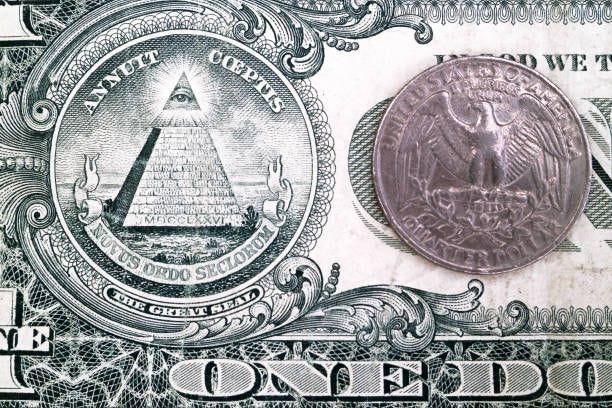
My point is that cultures have seen mathematics as representative of the divine order. Letters reflect that representation. The order of a system such as the Futhark might be purely arbitrary - a convenience based on whim. It might be a clerical error as the old story about the malum arborem suggests.
But such a shift would not have occurred randomly, I think, nor should such alterations be done blithely. The ancient world might have had the occasional clerical error or accidental shift, no doubt. But a wholesale change of the system or the meanings of the symbols simply would not have occurred by accident. That seems to be a fiction created to hide the gravity of a shift.
“Go away and think. Then, when you can come back and tell me that you do see the use of it, I may allow you to destroy it.”
Chesterton
These shifts in meaning/representation are based on a fundamental shift in the theological world the aftershocks of which are seen in politics, art, and language itself. Our current random world rejects such an interpretation; but perhaps that too is a misdirection so that we don’t see the theological shifts that even now are occurring in our culture.
I am not a philologist and owe much to those who are (Jackson Crawford, Cameron Thompson) but I do think that a healthy consideration can be given, even by amateurs such as myself, to the nature of semiotics - the study of signs and their impact on culture. We should think about what our symbols and images mean lest we blithely accept changes that, frankly, ought not to occur.
These ideas and symbols have been around a long, long time. Consider before you alter them or throw them to the dogs.
Such consideration is as easy as ABC.
Did the old Norse change the order? Or did they adjust the script to their own pre-existing order?
Semitic language also don’t follow the exact same order as developed in Greek and Latin languages. I’d be curious to compare with Georgian and Armenian.